
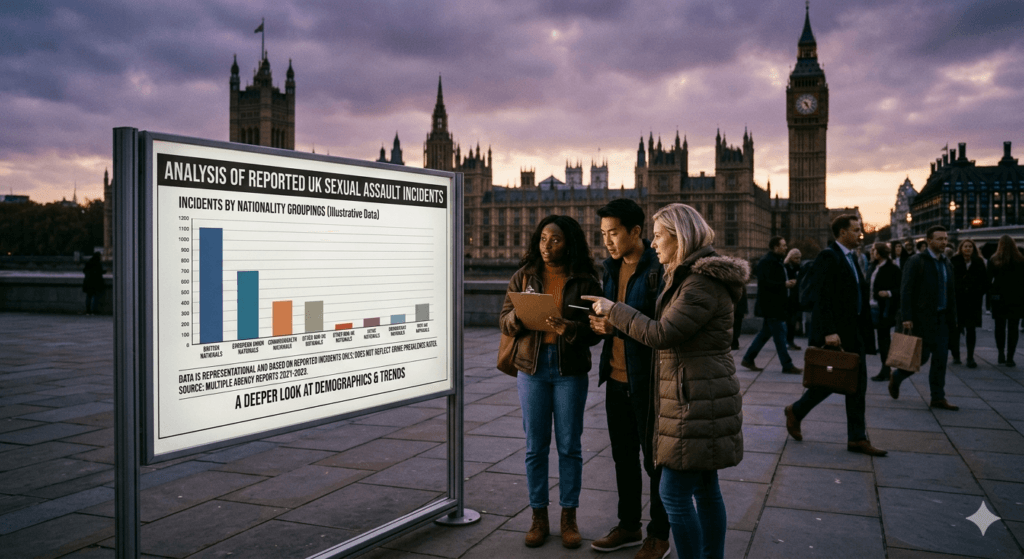
Explore the complex landscape of UK sexual assault rates by nationality over the past decade, revealing trends and insights that demand attention.
UK Sexual Assault Rates by Nationality: A
10-Year Breakdown
Overview of Nationality and Crime Reporting in the UK
Crime reporting in the United Kingdom has undergone substantial changes over the past decade, particularly in the context of sexual assault.
The complexity of this landscape is heightened by the diversity of nationalities residing in the UK, each contributing uniquely to the statistical data.
Understanding the nuances in crime reporting is crucial for a comprehensive analysis of sexual assault rates by nationality.
The Office for National Statistics (ONS) plays a pivotal role in collecting and disseminating data, ensuring that the information reflects the multifaceted nature of this sensitive issue.
Data collection methodologies have evolved, incorporating more sophisticated tools and techniques to capture accurate and representative information.
This evolution has improved the reliability of nationality-specific crime data, although challenges remain. For instance, underreporting remains a significant issue, influenced by cultural, social, and legal factors that vary across different nationalities.
Moreover, differences in the legal definitions of sexual assault between countries can complicate comparisons and interpretations.
The UK’s commitment to transparency in crime reporting has led to the publication of detailed annual reports, shedding light on trends and patterns that might otherwise go unnoticed.
These reports not only provide a snapshot of the current situation but also offer insights into the underlying causes and potential solutions. By examining the data through the lens of nationality, we can identify specific areas that require targeted interventions and support.
Historical Context: Sexual Assault Rates Over the Past Decade
The past decade has seen significant fluctuations in sexual assault rates in the UK, influenced by various socio-economic, political, and cultural factors.
In the early 2010s, reported rates of sexual assault were relatively stable, with minor year-on-year variations. However, a noticeable increase was observed around the mid-2010s, coinciding with heightened awareness and media coverage of high-profile cases.
This period also saw the rise of social movements like MeToo, which empowered more victims to come forward and report their experiences.
Despite the increase in reported cases, it’s essential to recognise that sexual assault remains one of the most underreported crimes.
Several studies suggest that the actual number of incidents is significantly higher than what is recorded in official statistics.
This discrepancy can be attributed to various factors, including fear of retaliation, distrust in the legal system, and cultural stigmas associated with being a victim of sexual violence.
Consequently, while the data provides valuable insights, it represents only a fraction of the true extent of the problem.
In recent years, efforts to improve the support systems for victims and streamline the reporting process have been intensified. Law enforcement agencies, non-governmental organisations, and community groups have collaborated to create a more victim-centric approach, aiming to reduce barriers to reporting and increase the likelihood of justice being served.
These initiatives have contributed to a gradual increase in reported cases, reflecting both a growing willingness among victims to seek help and improvements in the mechanisms for recording and addressing sexual assault.
- Air Horns
- Brass Knuckle Dusters
- Defence Bracelets
- Keychains
- Kubotans
- Pepper Spray
- Personal Alarms
- Tactical Pens
- Tactical Torch
- Tactical Whip
- Telescopic-Stick
- Whistles
Breakdown of Sexual Assault Rates by Nationality
A detailed analysis of sexual assault rates by nationality reveals significant disparities, highlighting the need for a nuanced understanding of the issue.
According to recent data, certain nationalities are disproportionately represented in the statistics, which can be attributed to a complex interplay of factors.
For instance, individuals from countries with high levels of gender inequality and weak legal protections for women may be more vulnerable to sexual assault, both in their home countries and after migrating to the UK.
Conversely, some nationalities exhibit lower reported rates of sexual assault, which could be indicative of underreporting rather than an actual lower incidence of such crimes.
Cultural stigmas, fear of deportation, and lack of awareness about available support services can deter victims from coming forward.
Additionally, language barriers and mistrust in law enforcement can further exacerbate the problem, making it difficult to obtain an accurate picture of the situation.
The data also highlights the importance of considering the specific circumstances of different nationalities. For example, asylum seekers and refugees may face unique challenges that increase their vulnerability to sexual violence.
The trauma of displacement, coupled with precarious living conditions and limited access to resources, can create an environment where sexual assault is more likely to occur and less likely to be reported.
Addressing these disparities requires a targeted approach that takes into account the diverse experiences and needs of various communities.
Factors Influencing Sexual Assault Rates Among Different Nationalities
Several factors contribute to the variations in sexual assault rates among different nationalities, necessitating a multifaceted approach to understanding and addressing the issue. One significant factor is the cultural context in which individuals are raised.
Societal attitudes towards gender roles, sexual behaviour, and victim-blaming can influence both the prevalence of sexual assault and the likelihood of reporting it. In cultures where gender-based violence is normalised or stigmatised, victims may be less inclined to seek help.
Economic factors also play a crucial role in shaping sexual assault rates. Individuals from economically disadvantaged backgrounds may be more vulnerable to exploitation and abuse, with limited access to support services and legal recourse.
This is particularly true for migrants and refugees, who often face additional barriers such as language difficulties, lack of social networks, and precarious legal status. These challenges can create an environment where sexual violence is more likely to occur and less likely to be reported.
Legal and institutional factors further influence the reporting and recording of sexual assault. The effectiveness of law enforcement, the availability of victim support services, and the strength of legal protections for survivors can vary significantly between countries.
In the UK, efforts to improve the legal framework and support systems have made progress, but disparities remain. For instance, individuals from countries with weak legal protections and inadequate support services may be less familiar with their rights and the resources available to them, leading to lower reporting rates.
Comparative Analysis: UK vs. Other Countries
Comparing sexual assault rates in the UK with those in other countries provides valuable insights into the effectiveness of different approaches to addressing the issue.
While the UK has made significant strides in improving support for victims and increasing reporting rates, it still faces challenges that are shared by many other nations.
For instance, underreporting remains a pervasive problem, driven by similar factors such as fear of retaliation, cultural stigmas, and distrust in the legal system.
In some countries, the prevalence of sexual assault is higher due to systemic issues such as gender inequality, weak legal frameworks, and inadequate support services.
Nations with high levels of gender-based violence often struggle to provide effective protection and support for victims, resulting in lower reporting rates and limited access to justice.
Comparing these contexts with the UK highlights the importance of addressing the root causes of sexual violence, rather than focusing solely on improving reporting mechanisms.
On the other hand, some countries have implemented innovative approaches that have shown promise in reducing sexual assault rates and improving outcomes for survivors. For example, countries with comprehensive sex education programs, robust legal protections, and well-funded support services tend to have higher reporting rates and better support for victims.
By examining these successful models, the UK can identify best practices and adapt them to its own context, ultimately working towards a more effective response to sexual violence.
The Role of Law Enforcement in Reporting and Recording Sexual Assault
Law enforcement agencies play a critical role in the reporting and recording of sexual assault, serving as the primary point of contact for many victims.
The way these agencies handle cases can significantly impact the likelihood of victims coming forward and the overall effectiveness of the response to sexual violence.
In the UK, efforts have been made to improve the training and resources available to law enforcement officers, with a focus on adopting a victim-centred approach.
Specialised units within police forces, such as Sexual Offences Investigation Teams (SOITs), have been established to provide dedicated support for victims of sexual assault.
These units are trained to handle cases with sensitivity and professionalism, ensuring that victims feel heard and supported throughout the process.
Additionally, partnerships with non-governmental organisations and victim support services have been strengthened, creating a more coordinated and comprehensive response to sexual violence.
Despite these improvements, challenges remain in ensuring that all victims receive the support they need. Variations in the quality of response across different regions and police forces can result in inconsistent experiences for victims.
Moreover, cultural and language barriers can hinder effective communication and support for individuals from diverse backgrounds. Addressing these issues requires ongoing training, resources, and a commitment to continuous improvement within law enforcement agencies.
Support Services for Victims of Sexual Assault in the UK
Support services for victims of sexual assault in the UK have evolved significantly over the past decade, with a growing recognition of the importance of providing comprehensive and accessible care.
These services range from immediate crisis intervention to long-term support, encompassing medical, psychological, and legal assistance.
Sexual Assault Referral Centres (SARCs) play a central role in this support network, offering a safe and supportive environment for victims to receive medical care, forensic examinations, and emotional support.
In addition to SARCs, a wide range of non-governmental organisations and community groups provide specialised support for survivors of sexual violence.
These organisations offer services such as counselling, legal advocacy, and support groups, helping victims navigate the complex process of recovery and justice.
Importantly, many of these organisations are equipped to support individuals from diverse backgrounds, with multilingual staff and culturally sensitive services to ensure that all victims receive the care they need.
Despite the availability of these services, barriers to access remain for many victims, particularly those from marginalised communities.
Factors such as geographic location, financial constraints, and lack of awareness about available resources can limit access to support.
Efforts to address these barriers include outreach initiatives, online resources, and partnerships with community organisations to raise awareness and improve accessibility. By continuing to expand and improve support services, the UK can better meet the needs of all victims of sexual assault.
Policy Implications and Recommendations for Improvement
The analysis of sexual assault rates by nationality and the factors influencing these rates has significant policy implications, highlighting areas where targeted interventions are needed.
One key recommendation is to improve the accessibility and effectiveness of support services for victims from diverse backgrounds.
This includes providing multilingual services, culturally sensitive support, and outreach initiatives to raise awareness about available resources. Ensuring that all victims, regardless of nationality, have access to comprehensive care is crucial for their recovery and pursuit of justice.
Another important policy recommendation is to enhance the training and resources available to law enforcement agencies, with a focus on adopting a victim-centred approach.
This includes ongoing training in cultural competence, trauma-informed care, and best practices for handling sexual assault cases.
By improving the quality of response across all police forces, the UK can ensure that victims receive consistent and supportive care, increasing the likelihood of reporting and successful prosecution.
Finally, addressing the root causes of sexual violence requires a multifaceted approach that includes education, legal reform, and social change.
Comprehensive sex education programs that promote healthy relationships and respect for consent can play a vital role in preventing sexual violence.
Additionally, strengthening legal protections for victims and holding perpetrators accountable is essential for creating a safer environment. By adopting a holistic approach, the UK can work towards reducing sexual assault rates and supporting all victims in their journey towards recovery.
Conclusion: Understanding the Data and Moving Forward
The examination of UK sexual assault rates by nationality over the past decade reveals a complex and multifaceted issue that demands attention and action.
Understanding the disparities in reporting and the factors influencing these rates is crucial for developing effective interventions and support systems.
While significant progress has been made, challenges remain in ensuring that all victims receive the care and justice they deserve.
The role of law enforcement, support services, and policy initiatives is central to addressing sexual violence and supporting victims.
By continuing to improve training, resources, and accessibility, the UK can create a more effective and compassionate response to sexual assault.
Additionally, addressing the root causes of sexual violence through education, legal reform, and social change is essential for creating a safer and more equitable society.
Moving forward, it is important to maintain a commitment to transparency, accountability, and continuous improvement. By regularly reviewing and analysing data, identifying areas for improvement, and implementing evidence-based policies, the UK can work towards reducing sexual assault rates and supporting all victims in their journey towards healing and justice.